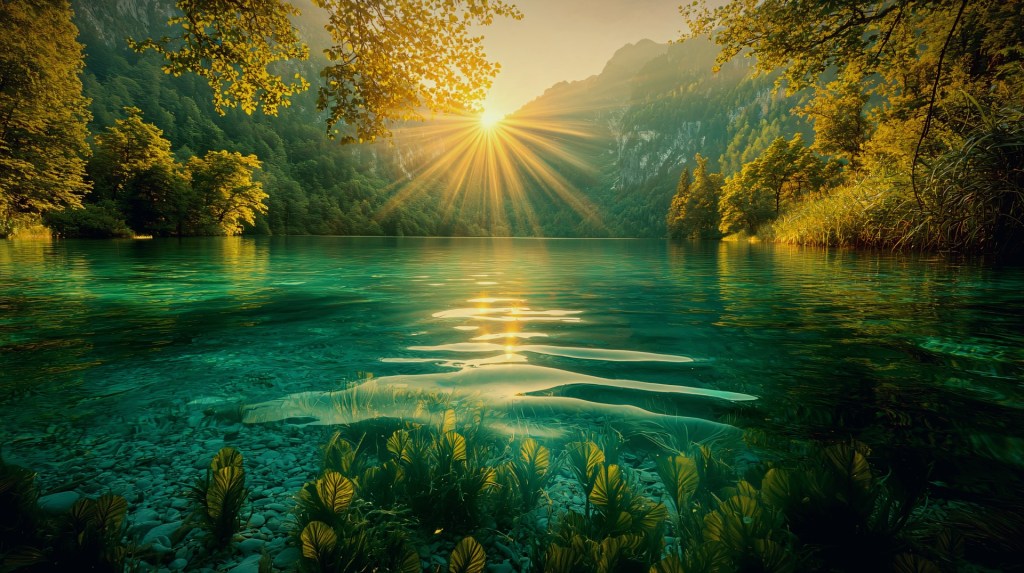
The Disconnect from Nature’s Nurture
We’ve lost two essential human connections: to one another and to nature. In this piece, I dive into the second—the deep healing and restorative power of nature—and speak to how modern disconnection from natural cycles damages physical, mental, and social well-being. This isn’t just a spiritual concept; it’s increasingly supported by science, public health studies, and sociological observations. As someone who spent years trying to heal trauma through therapy and technique, I’ve found that the most profound transformation occurred only after returning to a life close to the land. After fifteen years of attempting talking, analyzing, and processing trauma in clinical settings, I now feel—in my bones—what true recalibration feels like. Hiking, kayaking with my dog, and simply being outdoors has naturally restored the harmony of my nervous system, without needing to “figure it all out.” When the body begins to feel safe and in tune, the mind can follow. You can’t think your way into healing; you have to feel your way there first.
Reach out and Talk.
Please reach out if you related to anything in these articles or they trigger experiences in your own life.
A Note from Me to You
These articles are personal reflections — shaped by my experiences living in Africa, Asia, Europe, and the U.S. They’re not meant to be universal truths, but rather open windows into the cultural patterns I’ve witnessed and the questions they’ve stirred in me. Much of what I write here is about the quiet ways society can make us feel like we are the problem, when really, we’re responding in very human ways to a world that often feels disconnected or misaligned.
If something here resonates with you — if you’ve ever felt frustrated, misplaced, or just tired of trying to “fix” yourself to fit into systems that feel off — I’d love to hear from you. You’re not alone. This space is here to invite honest conversation, shared stories, and connection.
What are you navigating? What systems or beliefs have weighed on you? What are you hoping to shift?
I’d be honored to walk beside you on your path.
“Look deep into nature, and then you will understand everything better.”
— Albert Einstein
From Natural Rhythms to Concrete Routine
In traditional societies, people woke with the sun, moved barefoot across soil, and slept in rhythm with the moon. Their daily activities were intimately tied to the land, whether farming, gathering, or walking from village to village. Literature like Sunset Song, based in a Scottish farming community, captures this beautifully. Every season marked a shift in lifestyle and purpose. There is a natural rhythm of the cycle of things, the seasons, the life and death of seeds and crops. We are as much naturally in tune to cycles of rhythms as the plants and animals. Navigation happened through stars, not screens, and this orientation kept humans constantly aware of their place in the cosmos.
“When we reconnect with nature, we reconnect with the deepest parts of ourselves.”
— Thich Nhat Hanh
In contrast, modern life takes place indoors, surrounded by concrete and glass. We move through artificial spaces, isolated from ecological feedback loops. Even the act of walking—once essential for survival and community—has become optional. Without daily encounters with soil, trees, water, or stars, we lose an internal map of where we are, both physically and emotionally. The result is a creeping disconnection from purpose, a physical understanding of rhythm, and a larger sense of belonging to living things.
The Science Behind Nature’s Healing
Forest Bathing (Shinrin-yoku)
Developed in Japan in the 1980s, Shinrin-yoku—literally “forest bathing”—emerged as a response to rising stress-related illnesses in urban populations. Clinical studies have since confirmed that immersing oneself in a forest environment significantly lowers cortisol levels, reduces blood pressure, and improves immune function.
Meta-analyses reveal that regular forest exposure boosts natural killer cell activity and the production of anticancer proteins. Forest bathing has also been linked to significant reductions in anxiety and depression, with particular benefits for children and adolescents. Even short visits to green spaces during the week can have measurable psychological benefits, especially when incorporated as part of structured programs for youth.
Wilderness Therapy
Wilderness therapy, often used for at-risk youth or trauma survivors, involves extended time in nature combined with supportive group dynamics. Studies show it reduces behavioral problems, improves self-esteem, and enhances resilience. These outcomes are especially significant for adolescents from inner-city environments where green space and safety are limited. While results can vary depending on program quality, overall, the data supports nature-based interventions as an effective complement to conventional mental health treatment.
Attention Restoration Theory (ART)
ART posits that nature’s “soft fascinations”—such as watching leaves move in the breeze or clouds drift across the sky—restore our depleted attention reserves. Unlike urban environments, which demand constant focus and vigilance, natural settings allow our minds to relax and reset.
Evidence shows that hospital patients with views of trees recover more quickly than those facing walls. Similarly, children living near parks or green schoolyards demonstrate improved self-discipline and focus. These aren’t just anecdotes; studies across diverse populations confirm that time in nature sharpens cognition, calms the mind, and fosters emotional resilience.
Urban Forestry & Greenspace Proximity
Research into urban forestry has found that even modest access to green space can yield dramatic health benefits. For example, greening vacant lots in low-income neighborhoods reduced reported depression by up to 68%. In Dutch cities, neighborhoods with more than 28% green space saw decreased use of antidepressants.
Incorporating parks, rooftop gardens, and tree-lined streets isn’t just an aesthetic upgrade—it’s a public health intervention. Studies suggest that residents in greener neighborhoods experience lower rates of anxiety, reduced stress hormones, and increased community engagement.
Why We Heal in Nature
Ecotherapy is gaining traction as a legitimate medical intervention. From hospital gardens to “green prescriptions,” practitioners are recognizing that nature helps prevent and treat stress-related illnesses. The Biophilia Hypothesis, proposed by Edward O. Wilson, suggests that humans have an innate affinity for natural environments—one that modern life suppresses.
While metaphysical or quantum concepts like particle harmony and natural energetic flow are often poeticized, the science speaks clearly in its own way. Plants emit phytochemicals that boost immunity. Sunlight regulates our circadian rhythms and enhances serotonin production. Soil microbes may even influence mood through the gut-brain axis. These findings affirm that healing is not just about therapy rooms and medication, but about the environments we live in.
Nature as Preventative Healthcare
In tribal and agrarian cultures, health was built into the way people lived. Food was local and seasonal, movement was natural and daily, and illness was addressed with herbs, rest, and community care. In contrast, modern Western healthcare is reactive. We wait for symptoms to emerge, then treat them with pharmaceuticals, many of which are responses to stress or poor nutrition.
Industrialized food systems contribute to this crisis. Much of our meat comes from animals raised in inhumane, high-stress environments—leading to hormonal imbalances in the food itself. Fruits and vegetables are shipped long distances, stripped of nutrients, or replaced entirely by processed foods. As a result, America—despite its wealth—suffers some of the highest rates of malnutrition in the developed world.
“Nature itself is the best physician.”
— Hippocrates
Nature, by contrast, provides all we need. Locally grown produce, stress-free animal products, herbal medicine, and daily movement outdoors form a system of living prevention that’s still practiced in Traditional Chinese and Ayurvedic medicine. These traditions don’t separate body and mind or health and environment—they understand them as one.
Nature and Community
Beyond the individual, nature offers a space for communal healing. Sitting around a fire, hiking with others, washing clothes by the river—these are not just chores; they are platforms for connection. In tribal and village life, outdoor activity was the original therapy session. Movement wasn’t confined to gyms, and emotional connection wasn’t reserved for scheduled sessions.
Being outside creates a dynamic and fluid environment for human interaction. We move together, work together, and witness each other in motion. Compare that to modern indoor life: sitting in isolated rooms, interacting through screens, and carrying emotional energy between cramped spaces. A fight confined to a room stays in that room. Energy is condensed and consolidated. Relational and interactional tension happens as we move from one boxed space to another. Compare this to interactions that take place outdoors. Tension, tense energy and heightened emotions are always eased without the confines of concrete boxes that compact all the anxiety inwards upon us like compression chambers. Nature expands and eases our capacity to relate—not just to the land, but to each other.
We were not meant to live indoors, disconnected from soil, seasons, and stars. Our modern life has severed ties that kept us grounded, well-fed, and in rhythm. Scientific research now confirms what many have intuitively known: that nature is not just a backdrop, but a co-healer. It supports our nervous systems, enhances our immunity, restores our attention, and reconnects us to each other. It is a space of prevention, a field of movement, and a mirror for our place in the larger whole.
Healing does not always come through understanding. Sometimes it comes through rhythm. Through roots. Through rivers. Through walking until you feel yourself again.
These resources offer quantitative (stress, BP, immune) and qualitative (community bonding, self-esteem) evidence. They directly refer to the benefits I’ve experienced—walking, kayaking, recalibrating, healing trauma through natural immersion.
“To forget how to dig the earth and tend the soil is to forget ourselves.”
— Mahatma Gandhi

I’d Love to Hear From You
If anything in this article spoke to you, or sparked a thought, I’d love to hear about it. Whether you want to explore these ideas more deeply or simply share what’s going on in your life right now, you’re warmly invited to reach out. You don’t need to have it all figured out — I’m here to listen, reflect, and walk beside you in whatever part of the journey you’re in..
Return to the YOU are not the Problem
RESOURCES
Below is a List of Resources – Read, Watch, Listen and Be Inspired!
Science & Psychology
Antonelli et al. (2019) – Meta-analysis showing salivary cortisol significantly drops after forest exposure.
Stanford Longevity article (2023) – Review highlighting reduced cortisol, BP, elevated NK cell count, and boosted immune function from forest time TIME.
Frontiers in Psychology (2024) – Forest bathing aids stress resilience and sympathovagal balance
Time Magazine (2016) – Summarizes the relaxation, immune, and cancer-protection benefits of phytoncides TIME.
Anthropology/History
Wikipedia on shinrin‑yoku: historic roots and modern global uptake.
Psychology & Sociology
Nature-based recreation reviews (Lackey 2021; Tillmann 2018): Strong correlation with improved mental health.
SAGE & PubMed studies: Qualitative insights into adolescents growing through wilderness programs.
Natalie Beck & Wong (2022): Meta-analysis showing wilderness therapy reduces delinquency.
Wikipedia entry: Overview of adventure therapy’s history and outcomes Wikipedia.
Verywell Mind: Explains mechanism – group living, challenge, reflection Verywell Mind.
Environmental Psychology & Health
Nature exposure & mental health (Wikipedia): Summarizes benefits—stress reduction, better mood, attention restoration.
Green Exercise (University of Essex): Jules Pretty & Jo Barton’s research: exercise in natural settings positively impacts stress, cognition.
Indigenous Practices & Anthropology
Forest bathing history: Dating back to Roman and medieval European forest therapies.
Adventure therapy origins: Rooted in Native American and other traditional outdoor practices.
Quantum/Systems Science & Entanglement
While not mainstream, concepts from quantum entanglement echo our innate attunement to ecosystems—potential angle to explore further with reputable science authors.
Additional Scholarly Works
Roberts et al. (2019): Nature exposure’s moderate benefits on mood in controlled studies.
Indoor nature mods study (2025): Depression relief from integrating natural elements into living spaces.
Biodiversity & well-being (2023): Psychological benefits depend on nature-connection.
Extra Resources
Books
Forest Bathing by Dr. Qing Li
Shinrin-Yoku: The Art and Science of Forest Bathing by Yoshifumi Miyazaki
TED Talks / Documentaries / Videos
Look for talks on “Nature and Mental Health” by Ming Kuo or Jules Pretty.
Documentaries on Japanese shinrin‑yoku and Outward-Bound programs can enrich your article.
Podcasts
Episodes hosted by national park experts, environmental psychologists, or ecotherapy researchers (e.g., Nature Fix by Florence Williams)

 One in a Million
Leave a comment