These articles are part of the One in a Million platform — a space for real, soul-to-soul connection. They’re here to support the deeper conversations I have with people one-on-one. Through mentorship, friendship, and real-time companionship, I offer a place to talk, reflect, and walk beside you on your journey. Each article is meant to spark reflection, open dialogue, and gently support you as part of the larger experience at oneinamillion.me.
What if you could step back from your own thoughts and feelings—just for a moment—and see your life from a wider lens?
This piece invites you to play with the idea of consciousness as a camera: one that you can move in, out, above, or behind. It’s not about escaping your life, but about becoming more present within it—less tangled, more aware. Drawing on ancient wisdom and lived experience, this reflection explores how shifting perspective can bring maturity, peace, and true inner power. Whether you’re knee-deep in chaos or quietly contemplating your next move, this practice might just change how you see everything.
Reach out and Talk.
Please Reach Out if You’d Enjoy Talking About Your Daily Experience.
I’ve played with these tools myself — I only write about things that have made a real difference to my own daily experience, perspective, and state of being. Everything I share comes from inner growth and lived insight, not textbook techniques. I’d love to hear about your daily life — what you’re navigating, what you struggle with, and what you hope to shift or grow. I’d be honored to walk alongside you on your path.
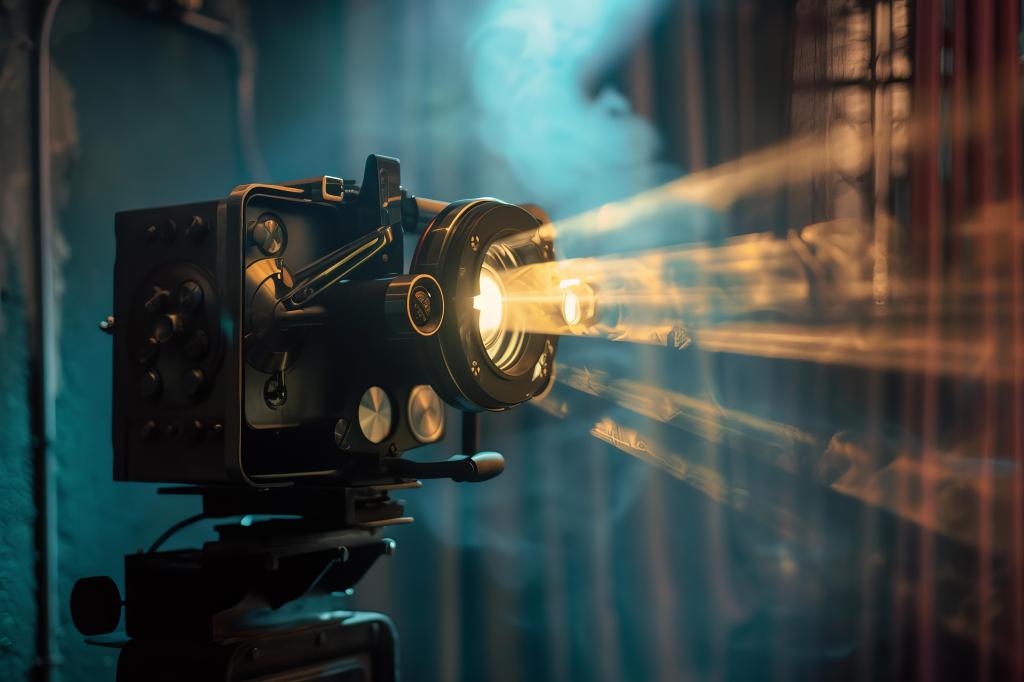
Today, try this simple yet powerful awareness trick: imagine your consciousness is a camera lens.
Start by placing that lens just behind your head—as if your soul is quietly sitting there, watching you move through your day. Don’t judge or change anything. Just observe. Watch your thoughts come and go. Notice how emotions rise in the body and pass like waves. See how your posture shifts, how you speak, how you respond.
Now move the lens. Float it gently up into the corner of the room. Watch yourself from there. What does life look like from that view? What would your soul whisper if it could speak to you through this hidden camera? Can you see yourself with compassion, curiosity, even humour?
As the day unfolds, continue to play with this camera. Pull it back farther, or bring it in closer. Shift between observing the body, the thoughts, the world around you. Let it be a game of awareness—not to escape life, but to gently disidentify from the chaos, and anchor yourself in the quiet stillness of the one who sees.
This is the “seat of the soul” that teachers like Michael A. Singer have described—a space of presence behind the noise. From here, life doesn’t stop, but your relationship to it softens. You’re no longer just reacting… you’re watching, choosing, being.
Try it. Just for today.
“You don’t have a soul. You are a soul. You have a body.”
— C.S. Lewis
Consciousness: Play with the Camera of Awareness
Most people live trapped inside their bodies and minds—believing their thoughts, emotions, and reactions are who they are. But consciousness is not thought. It’s not emotion. It’s the awareness behind all of it. And that awareness? You can move it.
Imagine your awareness as a camera lens. You can place it behind your eyes, drop it into your chest, lift it above your head, or zoom it out into the sky. You can observe yourself walking through the world. You can even hover behind your thoughts—watching them rise and fall like waves, without being pulled under.
This is the practice of non-identification. The ancients taught it in many ways—Buddha sitting with detachment, Stoics cultivating inner stillness, yogis stepping back into the Witness. When you observe your mind rather than become it, you return to your power.
You begin to choose rather than react. You begin to respond with wisdom rather than flinch in fear. Life will still unfold—but you won’t be tossed by every tide. You become like an iceberg—rooted and vast beneath the surface.
So play with this. Pull the lens back. Watch your life like a scene in a film. Notice what triggers you, what rises, and how it fades. Then zoom back in. Try shifting your camera each hour today. Experiment.
This is true mastery. Not controlling the world but observing it with clarity. Not suppressing emotion but noticing its wave—and choosing how to surf it.
Awareness is your greatest superpower. Use it. Play with it. And see what changes.
“Be the witness of your thoughts. You are what observes, not what you observe.”
— Deepak Chopra
TEACHINGS & RESOURCES
ANCIENT AND CONTEMPORARY TEACHINGS:
Below is a list of ideas from various ancient and modern teachings that support the ideas above.
Science
Neuroscience reveals that the brain can observe its own thoughts and patterns, a phenomenon called metacognition, supporting the idea that we are not our thoughts, but the witness of them.
Psychology
Carl Jung taught that individuation occurs through bringing the unconscious into conscious awareness, allowing the true self to emerge beyond egoic identity.
Quantum Physics
In quantum experiments like the observer effect, the presence of awareness changes the outcome — suggesting that consciousness may play a fundamental role in shaping reality.
Modern Day Living Examples
Many survivors of trauma and adversity (e.g., Viktor Frankl, Nelson Mandela) describe discovering an inner freedom — an unshakeable self untouched by outer circumstances.
Contemporary Teachers
Eckhart Tolle, Mooji, and Michael A. Singer teach that true freedom and inner peace arise from observing your thoughts without becoming them — choosing to live from the seat of the soul.
Sociology
Sociologists like Erving Goffman emphasized that we perform different “selves” in different social settings, implying that beneath these roles lies a stable observing self who wears the masks.
Ancient Philosophy
Stoics like Marcus Aurelius and Epictetus taught that while we cannot control what happens, we can always control how we respond — by stepping into the position of inner observer and master.
Ancient and Modern Spiritual Teachings
Advaita Vedanta and the Upanishads describe Atman — the soul as pure awareness, untouched by thought or body, and the witness of all experience.
Indigenous Wisdom
In many Indigenous traditions (e.g., Andean, Lakota, Aboriginal), the practice of “seeing with the eye behind the eye” reflects the understanding that true sight comes from spirit-awareness, not from intellect.
“The real voyage of discovery consists not in seeking new landscapes, but in having new eyes.”
— Marcel Proust
I’d Love to Hear From You
If anything in this article spoke to you, or sparked a thought, I’d love to hear about it. Whether you want to explore these ideas more deeply or simply share what’s going on in your life right now, you’re warmly invited to reach out. You don’t need to have it all figured out — I’m here to listen, reflect, and walk beside you in whatever part of the journey you’re in..
Below is a List of Resources – Read, Watch, Listen and Be Inspired!
Books
“The Untethered Soul” – Michael A. Singer A modern classic on becoming the witness of your inner experience and freeing yourself from the voice in the head.
“The Power of Now” – Eckhart Tolle A foundational guide to consciousness and the shift into presence as the truest self.
“Waking Up” – Sam Harris Neuroscience meets spirituality in a book that explores consciousness without religious overlay.
“Awareness” – Anthony de Mello A deep, practical look at waking up from unconscious living, full of sharp insight and humor.
“The Book of Secrets” – Osho Explores meditative awareness through tantric principles and the direct experience of consciousness.
“Wherever You Go, There You Are” – Jon Kabat-Zinn A simple and accessible guide to mindfulness and observing life nonjudgmentally.
“The Seat of the Soul” – Gary Zukav An introduction to living from your soul’s perspective instead of the personality.
“You Are the Placebo” – Dr. Joe Dispenza Demonstrates how shifting awareness changes biology — showing the power of mind over matter.
You Tube Videos
Eckhart Tolle on “You Are Not Your Mind” – [Eckhart Tolle Channel] A beautiful reminder of the observer state from the modern master of presence.
Michael A. Singer: “Your Inner Roommate” – [Sounds True] Explains the constant voice in your head and how to step back into awareness.
Mooji: “The Art of Detachment” – [Mooji Official Channel] Mooji lovingly guides listeners into resting in the seat of awareness.
Dr. Joe Dispenza on Consciousness & Quantum Fields – [Impact Theory Interview] Connects neuroscience and quantum physics with real-time personal transformation.
Adyashanti: “True Meditation” – [Adyashanti Official Channel] Describes awareness not as effort, but as resting in your natural state.
TED Talks
“The Art of Stillness” – Pico Iyer A beautiful reflection on stepping out of motion and into conscious presence.
“What Makes You You?” – Julian Baggini A philosophical dive into identity, thought, and self-awareness.
“How Mindfulness Changes the Emotional Life of Our Brains” – Richard J. Davidson Neuroscientific evidence that awareness and mindfulness rewire the brain.
“The Power of Vulnerability” – Brené Brown While not directly about consciousness, it explores the bravery of living from soul over ego.
“Your Elusive Creative Genius” – Elizabeth Gilbert A call to separate your identity from your thoughts, success, and emotions — creatively liberating.
Experts
Eckhart Tolle – Spiritual teacher focused on presence and awakening to awareness.
Michael A. Singer – Consciousness pioneer, author, and founder of The Temple of the Universe.
Dr. Joe Dispenza – Researcher and teacher bridging consciousness and quantum neuroscience.
Sam Harris – Neuroscientist and meditation teacher exploring awareness without dogma.
Mooji – Spiritual teacher guiding people to their pure state of being.
Tara Brach – Psychologist and meditation teacher integrating mindfulness and compassion.
Rupert Spira – Advaita Vedanta teacher focused on non-dual awareness and the true Self.
Research
Neuroscience of Metacognition – Frith, C. D. (2012) Shows how we observe our own thoughts, enabling self-awareness.
Mindfulness-Based Stress Reduction (MBSR) Studies – Jon Kabat-Zinn Clinical data showing how awareness practices improve mental and physical health.
“The Observer Effect” in Quantum Mechanics – Double-Slit Experiment Physics demonstrating how the presence of observation influences particle behavior.
fMRI Studies on Meditation Practitioners – Davidson, Lutz et al. Shows that long-term meditators have different brain structures linked to awareness and compassion.
Harvard Study on Mind-Wandering (Killingsworth & Gilbert, 2010) Found that “a wandering mind is an unhappy mind” — presence and awareness directly relate to well-being.




 One in a Million
Leave a comment